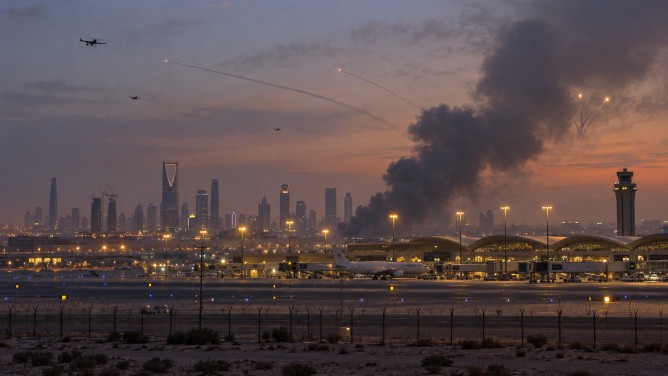
The recent missile and drone attacks by Yemen’s Houthi group on Saudi Arabia have heightened fears over the security of civilian and energy infrastructure in the region. As explosions rocked Riyadh, emergency responders tackled a fire near King Khalid International Airport, causing widespread concern. This incident underscores the vulnerability of critical sites in Saudi Arabia amid the ongoing conflict.
Late at night, Saudi authorities sounded air raid alerts in Riyadh and other cities, marking a significant escalation in the conflict that has been intensifying since July. The Saudi military coalition reported that its air defenses intercepted a missile aimed at the capital, later issuing an all-clear to residents. Despite these defenses, the threat to civilian life and vital infrastructure remains a pressing issue.
The Houthi group claimed responsibility for the attacks, describing the targets as sensitive sites in Riyadh. They stated that these actions were in retaliation for Saudi-led military operations against Houthi positions in Yemen, where hundreds of airstrikes have reportedly taken place in recent days. This tit-for-tat escalation has drawn international condemnation, with the UN Security Council decrying attacks on civilian and energy facilities and urging measures to prevent further armament of the Houthis.
The conflict’s ramifications extend beyond Saudi borders, with concerns mounting over the safety of shipping and energy supplies passing through the Red Sea and the Bab al-Mandab Strait, a crucial maritime corridor. The situation is further complicated by the wider regional tensions involving Iran, the United States, and their allies, prompting Washington to advise its citizens in the area to exercise increased caution.
As the conflict in Yemen continues to spill over into neighboring territories, the potential for disruption to global energy supplies and regional stability looms larger. The international community’s focus remains on curbing the conflict’s escalation and addressing its root causes to prevent further humanitarian and economic fallout.