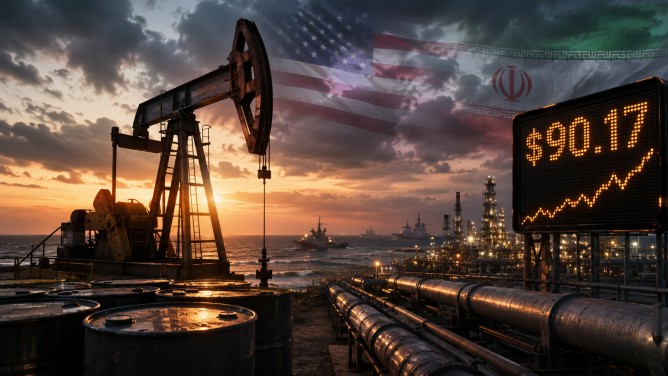
The expiration of a two-month negotiation period between the United States and Iran without reaching a peace agreement has significantly impacted global oil markets. With the possibility of the conflict persisting, oil prices surged, reflecting concerns over potential disruptions to energy supplies worldwide. Brent crude prices soared past $90 a barrel, peaking at $91.63, marking the highest level since late July. This spike follows a stern warning from US President Donald Trump, who has called on Iran to surrender and cautioned of escalating tensions if diplomatic measures fall short.
The Strait of Hormuz, an essential corridor for global oil shipments, has become a focal point of anxiety, with a noticeable decrease in commercial vessels navigating the passage. This decline has intensified fears of extended disruptions in oil supply, prompting investors to brace for potential long-term impacts on the market. The situation has been further aggravated by reports of an attack on a cargo vessel transiting the strait, raising alarms about maritime safety in the region.
Iran has signaled the possibility of adopting a more assertive military approach should negotiations continue to falter. Such developments are heightening concerns not only over the immediate security of shipping routes but also over the broader implications for the energy sector. A sustained interruption or limited traffic through the Strait of Hormuz could exert additional upward pressure on crude oil prices, affecting economies reliant on stable energy costs.
Analysts are cautioning that the ongoing tensions in the Middle East, compounded by the conflict in Ukraine, could precipitate further shocks in global energy markets. This confluence of geopolitical uncertainties threatens to drive oil and gas prices even higher, adding to the financial strain on consumers and industries worldwide. The combined effect of these conflicts underscores the fragility of the current energy landscape and the potential for significant economic repercussions.