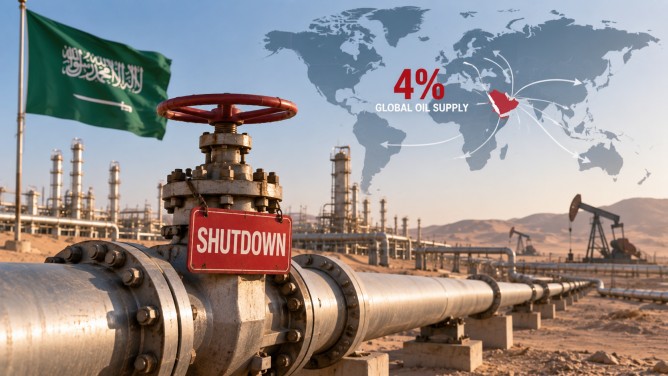
Saudi Arabia has taken the precautionary step of temporarily closing its critical 1,200-kilometer East-West oil pipeline following an attack, sparking concerns about the stability of global crude oil supplies. This development coincides with the expanding influence of Iran-backed Houthi forces along Yemen’s Red Sea coast, which poses a potential threat to regional oil shipments. The growing territorial control by the Houthis, especially near the Bab el-Mandeb Strait—a vital maritime passage linking the Red Sea to the Gulf of Aden—has heightened worries about the security of oil transportation in the area.
The East-West pipeline, shut down on September 12 as a preventive measure after the previous day’s attack, is strategically significant for Saudi Arabia. This pipeline facilitates the movement of crude oil from the eastern production zones to the Red Sea, offering an alternative route for exports, particularly when disruptions occur in the Strait of Hormuz. Following severe interruptions in the Strait of Hormuz amid the US-Iran tensions, Saudi Arabia had ramped up exports through its Red Sea facilities. The recent assault on the pipeline could therefore exacerbate challenges in Saudi Arabia’s capacity to deliver crude to international markets.
Market analysts have expressed concerns that an extended closure of the pipeline could significantly impact global oil supplies. This is particularly critical as Brent crude prices have already surged beyond $100 per barrel amid rising tensions in the Middle East. The potential for prolonged disruptions in both the Strait of Hormuz and the Bab el-Mandeb Strait could have far-reaching implications, affecting global energy supply chains, increasing transportation expenses, and potentially driving crude prices even higher.
Such increases in oil prices could lead to inflationary pressures across major economies, raising costs for fuel, transportation, and production. Countries with high dependency on imported energy might experience added strain on their trade balances and currency values. The length of the Saudi pipeline shutdown, along with the evolving security landscape around the Red Sea and the Strait of Hormuz, will be crucial in assessing the broader impact on global oil supply and energy markets.